
➀Purpose
・While rough machining using ball-end mills traditionally offered high stability, it was time-consuming and required frequent tool changes.
・We proposed radius machining as a method to improve machining efficiency and reduce overall costs.
②Key Points for Implementation
1. Explaining the Advantages of Radius Milling
Compared to ball-end mills, a single tool can handle everything from roughing to finishing.
This is expected to reduce total long-term costs.
We take the customer’s actual machining conditions into account.
2. For the trial implementation, we prepared radius cutters from multiple manufacturers.
We conducted machining tests in an environment that facilitated easy comparison.
We provided specific product proposals.
3. We conducted a selection process that included the MOLDINO EHHRE-TH3.
③Examples
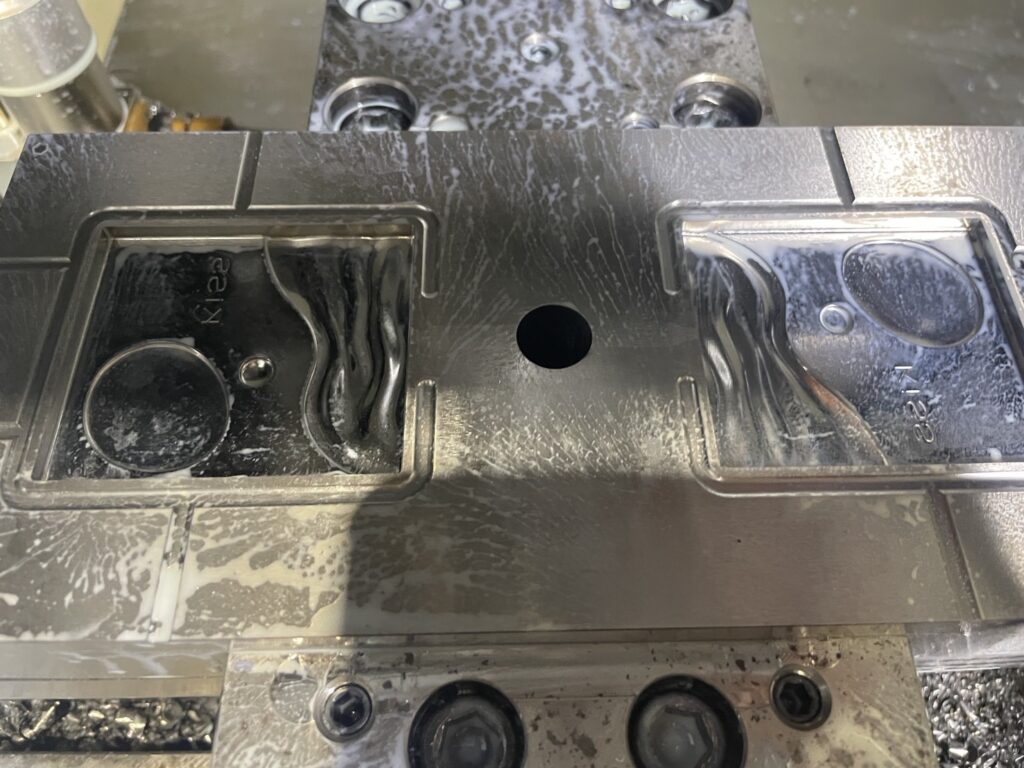
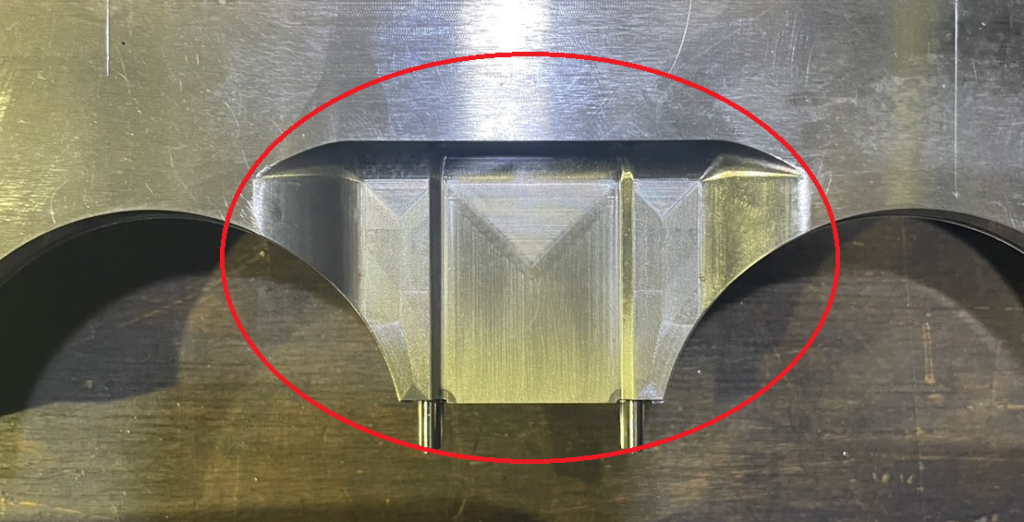
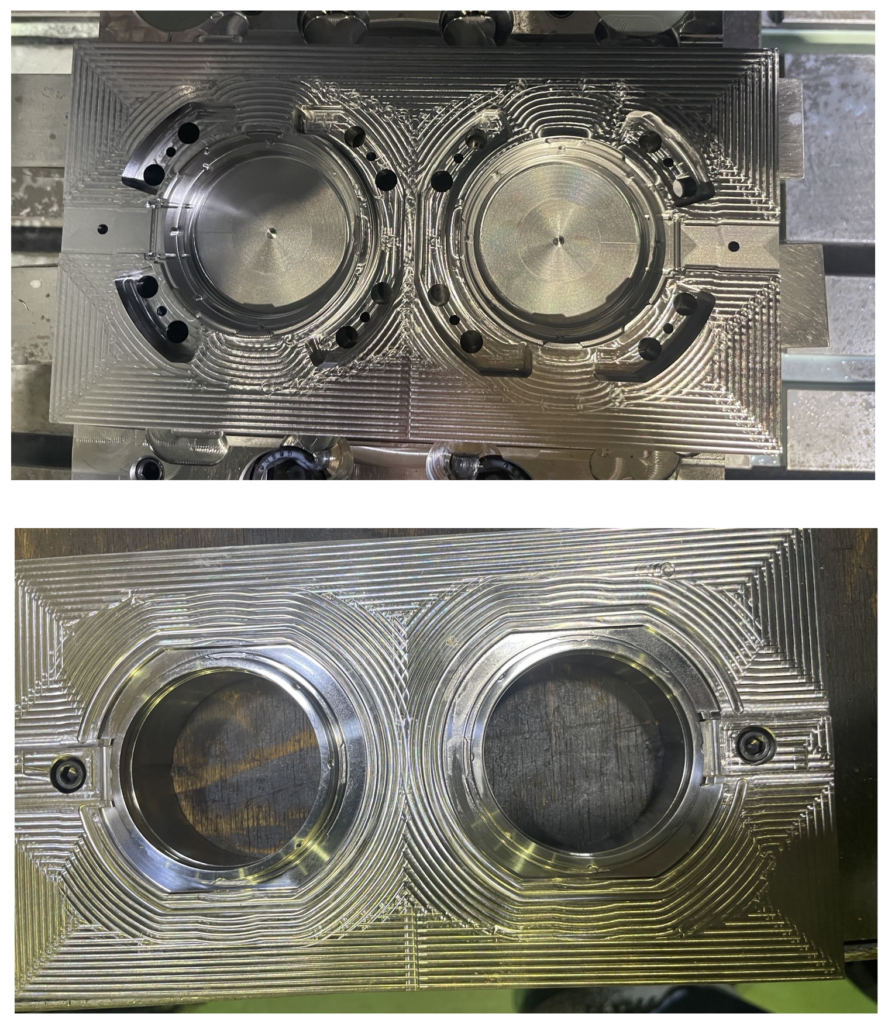
When we proposed using radius end mills as a replacement for the ball end mills currently in use by one of our clients, they expressed interest and conducted a test machining to compare them with the ball end mills.
For the test, we used radius end mills from two different manufacturers.
The workpiece used for this machining was NAK-80 (a part with a complex shape requiring high machining accuracy).
The machining conditions were set to match those of the ball end mills for comparison.
④Results
・Reduced Machining Time
With MOLDINO’s EHHRE-TH3, machining time is cut in half compared to products from other manufacturers.
In particular, rough machining with a φ6 radius tool from another manufacturer took approximately 9 hours,
but the EHHRE-TH3 completed the job in just under an hour using a single tool.
・Improved Efficiency
The entire process, from roughing to finishing, is completed with a single tool. This eliminates the need for tool changes, improving work efficiency.
・Cost Reduction
Although the initial cost of the radius tool is higher than that of a ball end mill, the reduction in machining time and tool changes
results in lower total long-term costs.
From the Staff
In this case study, the introduction of radius machining led to improved operational efficiency and cost savings.
If you are considering switching to radius machining, please feel free to contact our sales team!